
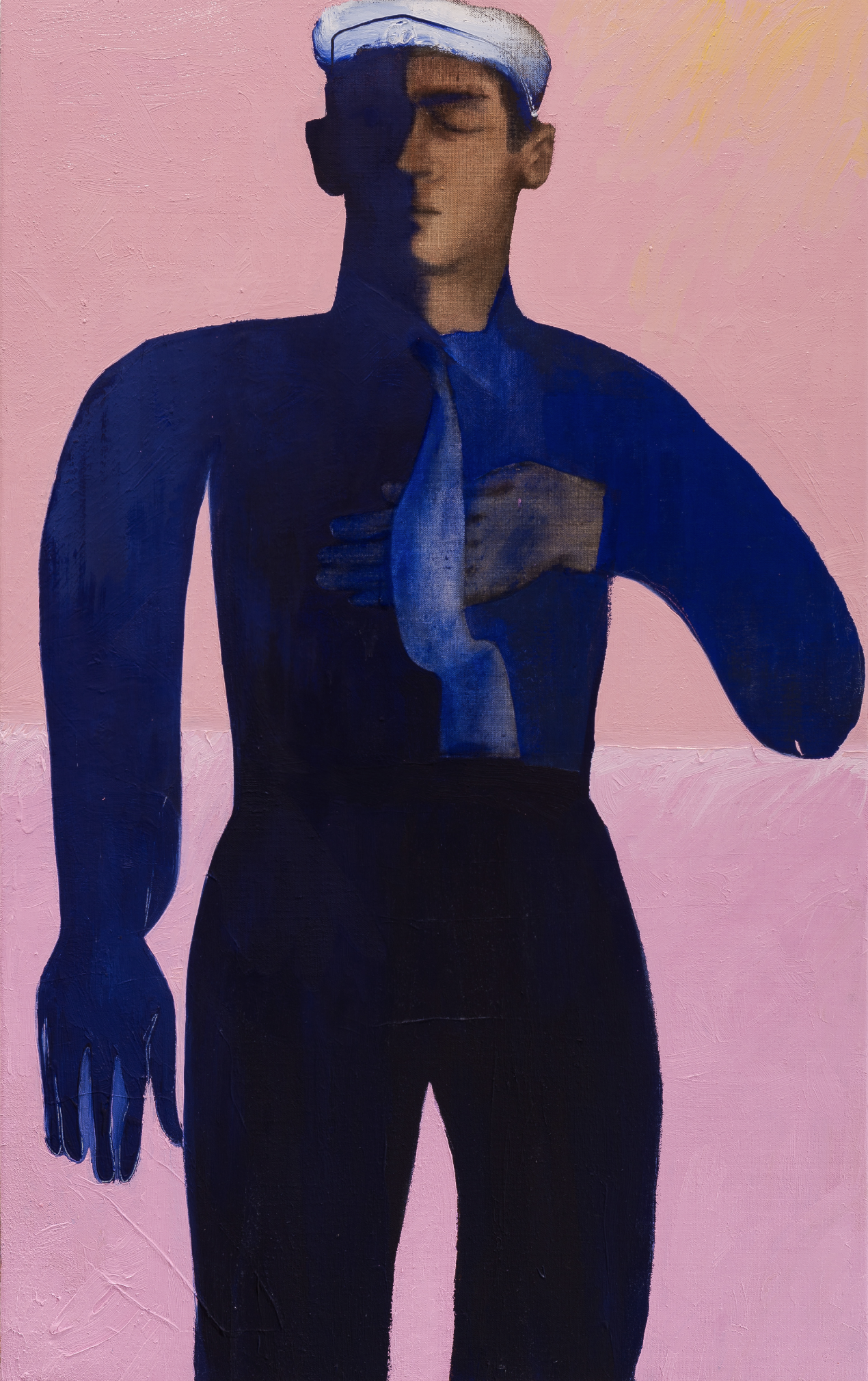
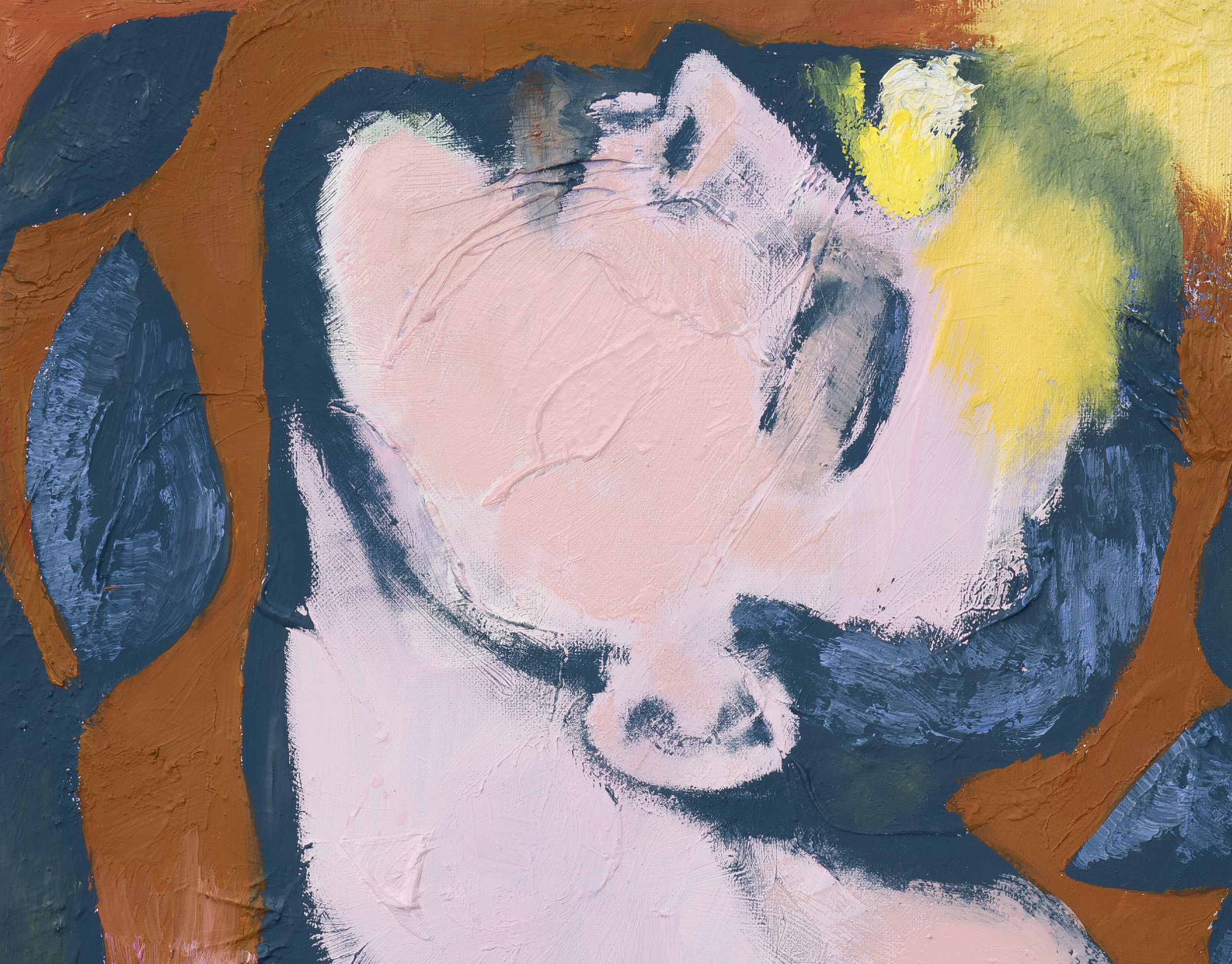
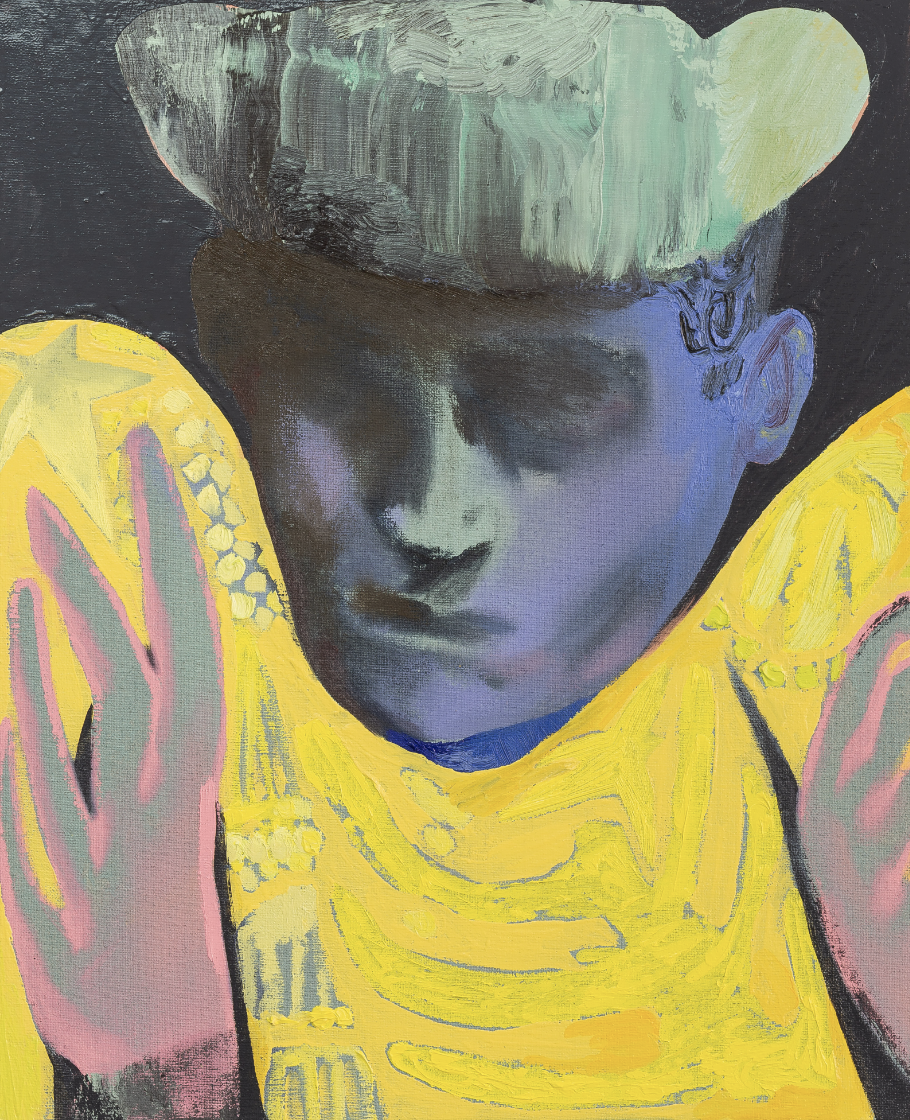
The British artist Alex Foxton explores a certain idea of the male figure through his paintings. His style, somehow in dialogue with Cocteau's, is recognizable in its poetic dream quality.
THE LIGHT OBSERVER : How would you define your paintings?
ALEX FOXTON : I don’t know where to begin!
We could start by the fact that you are essentially painting male portraits. It is somehow a central theme of your work, how do you explain that your work revolves around that subject?
I’m still figuring that out. I have tried many other subjects, but I always come back to the male figure. Some days, I think it’s just that I need a familiar shape to push paint around in. I’m trained as a fashion designer so that’s part of it, but it’s not the whole story. In fact, I think the two – to make clothes and to make paintings – come from the same source.
People have suggested that the paintings are all self-portraits, but for me each one (if it’s a good one) seems like his own person. When they leave the studio I miss them.
We could also say that your portraits are reminiscent of Bacon's. “Movement is the very condition of their existence” as Stéfan Leclercq points out in his book L'expérience du mouvement dans la peinture de Francis Bacon. What role does movement play in your paintings?
Bacon was more interested in a sort of slippery cubism I think. I’m not so clever. My ultimate goal is that they seem alive, that they are somehow moving and still at the same time. The rhythm of the shapes on the canvas is where movement comes in for me.
What about contrast—light and shadow?
The high contrast usually comes about when I’m trying to flatten and create relief at the same time. That’s why the faces are often half in shadow, so that there’s a pull between a flattened-out silhouette and a modelled, three-dimensional face.
Does light have something to do with revealing or hiding things for you?
Light is mostly atmosphere for me. Right now I’m looking at a lot of backlighting, which is pretty dramatic. It’s in a lot of sinister images, like propaganda and horror film posters, but also in imposing portraits like those Velazquez ones where the light seems to move around behind the figures.
Are you more attracted to natural or artificial light?
I think I prefer daylight. I like the sun bouncing off the river. But I also love the city at night, in the rain. And I love a dimly lit restaurant.
A place you associate with light?
My studio. The cinema. My apartment on the 7th floor. New York City. The Seine. There are days in Paris after months of endless grey when the sun appears and the light seems kind of solid, like it’s glass.
Looking at your paintings, I was wondering what does the colour pink mean to you?
Pink can be anything. For me it’s the colour of the subconscious, although I can’t really explain why. It can flush out over-seriousness, but it can also be a harsh antidote to sweetness.
We often hear that the artist's goal is to be himself/herself. What does it mean for you?
It’s like a slow and awkward process of getting rid of what you can’t accept any longer.
Do you have a daily ritual, a working approach?
Not really. I guess my working approach is just doing and doing and doing, even if everything that comes out is shit.
Do you do drawings beforehand or do you start on the painting? How does that influence your approach?
I draw a lot ,but it’s more a way of thinking than of planning. Sometimes I’ll figure out a composition or make studies of a figure, but often I avoid that, in order to create a freer or less harmonious composition. Recently, I’ve been working directly from source material, where I look at an image for a long time, then put it away and go straight to the canvas. I figure it out on the fabric. There’s a lot of scrubbing out.
What is your atelier like?
Very messy. The tragedy is that I love order, and space, but I’m completely incapable of maintaining it.
What attracts you in diptychs? You have been doing a few.
They’re actually never intentional. They often start out as very different paintings and then drift towards each other...
Your characters very often have their eyes closed. What are they dreaming about?
I know as much as you do.
And do you sometimes dream about paintings, get ideas from dreams?
I often dream about painting, but I can’t say I get ideas like that. Though I do think dreams should be taken seriously. The whole human race spends hours every night in this mental activity that we just laugh about the next morning.
What do you keep on your bedside table?
A lamp, a book, my phone, an iPad, headphones, a magazine.
What does obscurity/darkness evoke for you?
Sleep, sex, uncertainty, space, dreaming.
Article featured in Issue 02
More about
Alex Foxton

Issue 02 / White Cover
Sale Price:
€9.00
Original Price:
€18.00
From philosopher Alain Badiou experiencing the “luminous black” to photographer Duane Michals who seeks to “see his friend’s head dissolved into pure light”, this issue features Olafur Eliasson, Alex Foxton, Amiko Li, La Maison de Verre, Tommaso Protti, among others. It also presents exclusive artworks by Caroline Denervaud: a series of collages inspired by words from John Berger.