
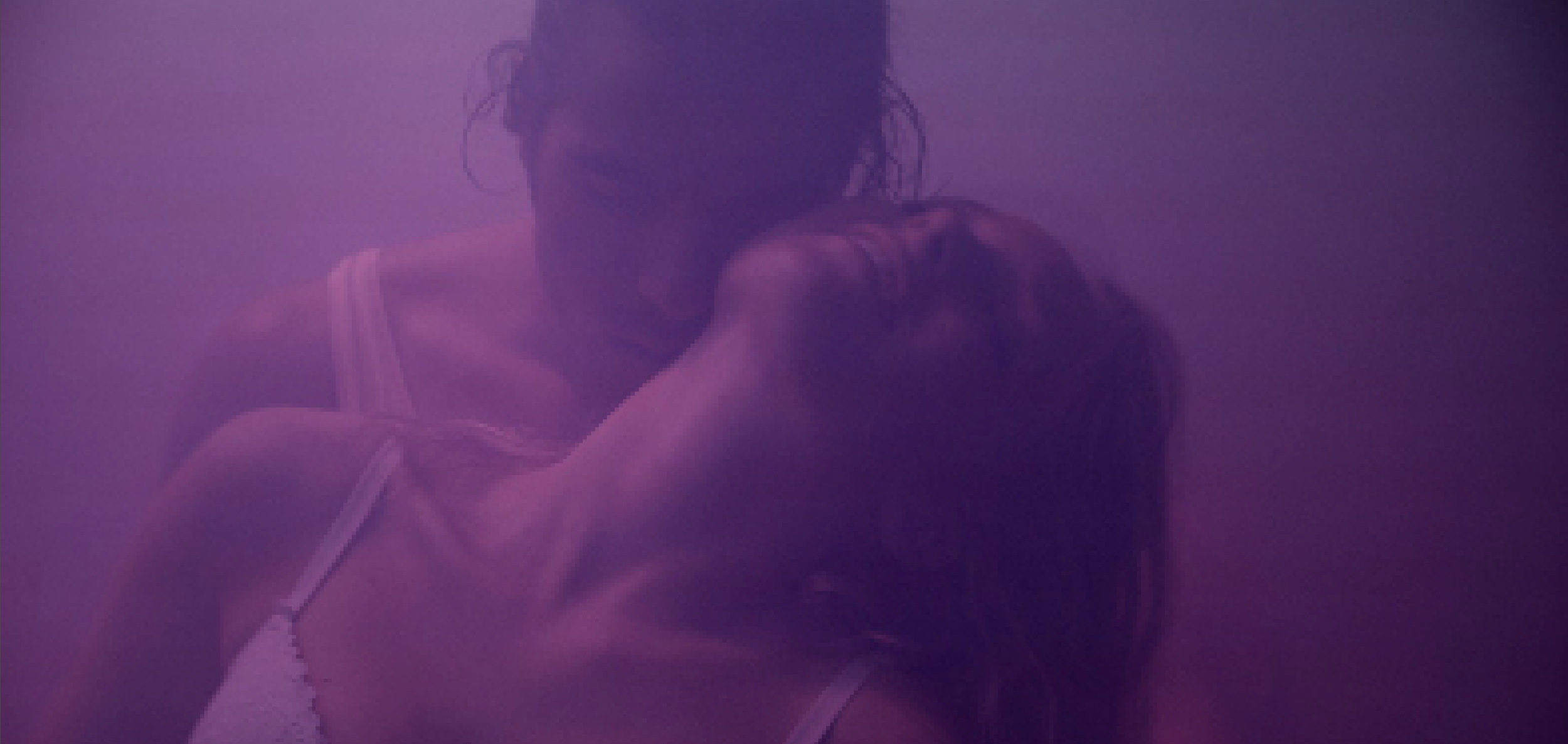
Marco Graziaplena is a cinematographer known for a tactile, immersive visual language that privileges natural light, duration, and bodily presence. His work often blurs the line between observation and intimacy, allowing scenes to unfold with a lived-in spontaneity that feels both documentary and deeply sensual. This approach is especially emblematic in Abdellatif Kechiche’s Mektoub, My Love trilogy.
THE LIGHT OBSERVER : First I'm curious to know how was Giuseppe Rotunno as a mentor? He's one of the most acclaimed Directors of Photography and you had the chance to learn from him. We don't speak a lot about DOPs even if they do play a crucial role in the making of a movie. I already mentioned Giuseppe Rotunno as an important figure, we can also evoke Vittorio Storaro who worked with Bertolucci and Coppola. He is famous for high contrast images, a "grainy" texture and yellow-orange shades. Benoît Debie who works with Harmony Korine and Gaspar Noé enjoys the use of neons and vibrant colours. How would you describe your own visual style? Do you feel it's important to have a signature as Director of Photography?
MARCO GRAZIAPLENA : There’s two main ways in cinematography. You can put the story first, the movie itself. The other way is to focus on the light and how it shapes things. You’ve got to choose which way to follow, but none of those roads is better than the other. Rotunno and Storaro are two perfect examples of the two different approaches. You just have to understand who you are, what you do best. Because your personality will affect and shape your light, and you can’t hide it. You have to understand yourself. I mean: understand in which particular domain you are more gifted. This is a crucial step in a cinematographer’s career, my film school and my teachers helped me a lot to figure this out.
What kind of artists inspire you?
I would be happy to understand what makes an artist, how can someone be an artist. I didn’t understand it yet. The short answer is: everything can be an inspiration.
About Mektoub, My Love, how did you get involved in the first place?
We met because Kechiche had a project about a book from the 13th century, a pretty rare one. It happens to be one of my favorite and I was surprised that someone else could be fascinated by this, it's such an odd story. His producer Riccardo Marchegiani introduced us. Kechiche proposed me Mektoub a few months later, but he never filmed the story about the other book.
Mektoub is a trilogy. The first film starts with two quotes about light, one from the Bible and one from the Koran. The whole movie is an ode to light. How did you manage to let the light in?
The main problem about light is that any kind of lighting source creates an area of darkness behind the objects. This is called contrast in photography. A friend of mine is used to saying that this simple and obvious physical effect has huge metaphysical consequences. Some philosopher refers to light as “good”, and dark as “evil”. The real question is: without shadow we wouldn’t be able to see the shape of things, because the whole world would be only light. Regarding the religious quotes at the beginning of the movie, in the Middle Ages, the entrance of hell was ideally placed under Jerusalem, the center of the Universe and its brightest spot. This is the scheme in The Divine Comedy for example. It means that under the brightest spot, there’s the darkest one. The main point in those religious quotes would be: is the light that lights up the world the light of the Reason, as a lot of philosophers believed after the Enlightenment in the 18th century? Or does this light come from somewhere else, and our human reason is just a consequence, a shade created afterwards? The answer is a question of moral. Are Light and darkness absolute, as for Plato, or subject to relativism, as for Montesquieu? Everyone has to answer on his own, there’s a huge difference between the two approaches. There are some very special moments you should be aware of: if you don’t see any shadow at all, normally it means that you are in complete darkness. Here physically, obviously, yet this is much more complicated to understand metaphysically.
The movie is a sensual experience, it has also to do a lot with dancing. One of the protagonist, Céline, is a young dancer. Everyone dances though: at the beach, at the bar, in the club. It feels like the camera is part of that dance. How did you manage that?
If you’re shooting dance, everything has to dance. Everything is part of the same energy: everything is a dance, our whole life is dance itself. Kechiche pushes everything till the very edge, he is interested in the deep essence of what he’s shooting. Since dance is just the world itself, it is extremely important to him.
Then what is it like when you get the right shot? The feeling that everything is perfectly sequenced. Do you allow luck and randomness to come into play? Or is it more the result of a long and meticulous construction?
Kechiche used to say that our approach to this movie was like fighting a guerrilla. Cameras had to be hidden, unseen, yet ready to get into action. Anything can happen anytime, and you have to pay attention all the time to understand what is going on. The only thing that in not acceptable when you’re shooting a movie like this is the lack of attention. If something unique is happening at a precise moment you can’t miss it just because of a lack of attention. Every scene in the movie has a precise structure. Everything had been studied in details for days and weeks. Studying the camera setup for Intermezzo took us months. What happens in front of a camera may look random. This is not true: something happens because it has to happen. Luck or randomness do not really exist, everything has a reason. We just feel safer thinking that luck or fate can affect our actions. But once again: attention is the main point, without attention you’re just a dead man walking. I guess that the term “guerrilla” was also related to our organization, to our approach to the movie industry. It has also a political logic.
You said attention was crucial on set. We actually feel this great deal of attention on screen. The fact that you are filming close to the actors allows to be constantly challenged on what to look for, capturing details, moments of truth. What kind of optics and lenses did you use to get that result?
The choice of our technical equipment took months and was very precise. We just tried out every possible combination of camera and lenses. We chose what was best for the movie. For the first time in my life I was thinking while preparing this movie: is a lens the technical equipment that allows to shoot a scene in the precise style you aim at, or is it just a bunch of glass and metal sealed together?
What was the most challenging thing while shooting Mektoub, My Love, in terms of lighting?
Lighting the area with restaurants and bars in Canto I has been quite challenging. The second scene of the movie, when the group arrive from the harbour and later dance in the bar was conceived as a master shot, to be filmed without stopping. And still this is just lighting. The most challenging thing is the actual filming of the movie. You always have to push the limits, look for the breaking point in the technique, in your equipment, in the storytelling. First of all within yourself, there is no other way. It is almost a moral obligation, you can’t stop doing it. You have to dare to take risks while shooting a movie like this, otherwise you’re just wasting time. It just won’t work.
The scene where the lamb is giving birth is also quite unique. It feels like documentary cinema leaves room for the fantastic. It's also quite a metaphor of the work you're doing, waiting to capture precious moments. How was that moment like?
The lighting setup was the lightest I’ve ever used: we couldn’t disturb that sheep while giving birth. As a cinematographer you have a direct impact on what you're shooting and your actions will affect the shooting. Sometimes the more invisible you are the more you’ll be able to capture what is in front of you. Overdoing it will lead you to risk changing and modifying, not for the better, something that already exists. But you cannot just wait either, because you will miss something precious and unique that is happening in that particular moment. Once again, it is just a matter of attention.
Those who have been working with Kechiche describe him as a very instinctive filmmaker. Do you agree? How does that translate on set?
I can’t say if he’s as instinctive as it seems. Sometimes you think that you’re shooting something that looks absolutely spontaneous. After a while you realize that he already had a precise idea of the sequence, and he just lets things happens at the right time, when everything else is ready.
He said about Mektoub, My Love that he was inspired by Picasso's colours. I think there is the idea of raw material, something primary that fits well the movie. In the end it's about this particular time when you enjoy life, not being an adult yet, experiencing time in a frontal way. In that sense the fact that Mektoub, My Love is actually divided into three movies and recreates the feeling of time passing by is quite beautiful. It's also quite provocative to do such a film today. Did you have the sensation of being privileged to work like that: capturing subtle variations while fully appreciating the nuances?
I believe that the Mektoub trilogy is something hardly ever tried before, even if it will take time to be widely recognized. The third movie has yet to be finished, and I guess it will be the more narrative, more similar to the common idea we have about movies. The main argument in Canto I is time, what is our perception of time and memory. Looking at the movie from this perspective, you can say that is extremely provocative. People are less and less attentive while watching a movie. We are basically building up a new generation that gets tired and bored extremely quick. Everyone wants more and more stories to consume and watch even on a smartphone during their daily commute: the attention for story telling has never been so low in the whole history of humankind. From this point of view, Mektoub is one of the more anti-consumerist movie I know. Pretty revolutionary. Basically there’s no plot in the movie, but you’re just seduced by the storytelling. You let yourself go with the flow, or it is better to leave. There’s no other possible solutions. Everyone has been one of the characters, maybe more than one at the same time. Everyone passed through that shadow line between being not completely adult, yet no more a youngster. In Mektoub, the present and the memories merge in one flow. This has been a major theme in the literature of the last century, but it is quite unusual to be filmed in this way. Mektoub Intermezzo goes even beyond that. The movie challenges the basics of film language. The question is: what’s the real limit, the breaking point of cinema itself as we know it? Do I need screenplay, editing, photography, make up? Before the Russian Formalism no one really knew the real power of editing. The cinema is as it is today because of all those experiments. At the same time during the ’60 Nouvelle vague, New Hollywood and Italian cinema started a new revolution in storytelling. The goal in Intermezzo is to give the same emotion to actors and technicians during the shooting, but also to the audience during the screening. Is it possible to create the same kind of collective “trance” in different moments of time and space? You need something bigger than the movie itself to create this huge energy. Intermezzo is not even cinema anymore. It is a performance pushed to its furthest limits. I cannot even remember that I shoot some particular scenes of Intermezzo. I was completely part of something bigger than me, and everyone in that disco was part of it. The audience will be part of it too, when they will watch the movie. I guess we can say that this is pretty provocative and revolutionary. Basically Intermezzo is a huge cinema experiment.

The first issue of The Light Observer focuses on exploring light in different forms and areas. For this issue, Nathalie Du Pasquier created a series around the theme of light: a storytelling mixing words and drawings entitled LUX. The fine pattern, humour, acute sense of shape and colour make this collection very distinctive and recognizable. We also met the great explorer and scientist Michel Siffre and spoke about his adventurous life and discoveries. The director of photography Marco Graziaplena will tell us about his experience on set with Abdellatif Kechiche and his approach to filming. Montreal based photographer Guillaume Simoneau speaks about his relationship to light and telling personal stories through photography. And many more exciting stories!